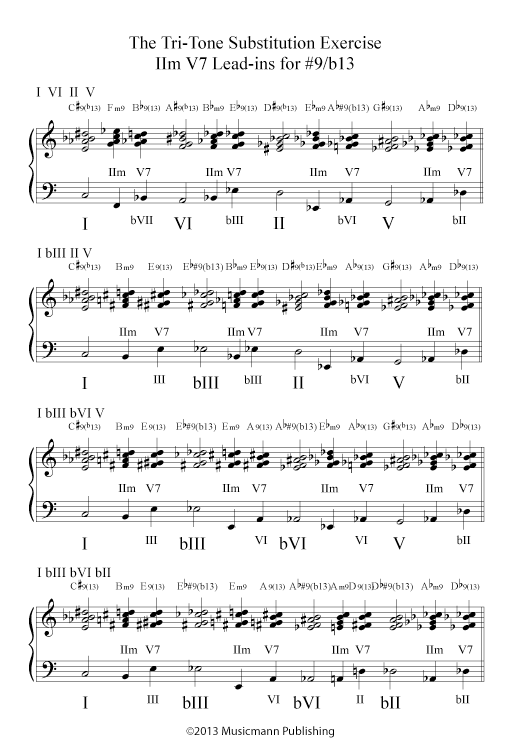
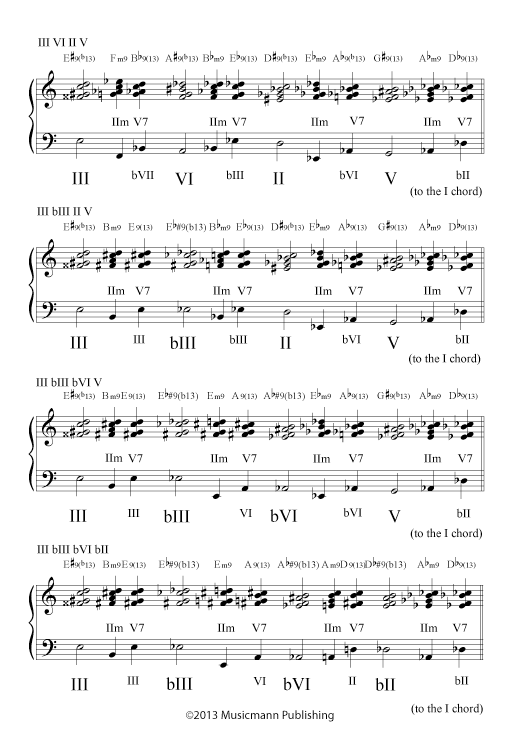
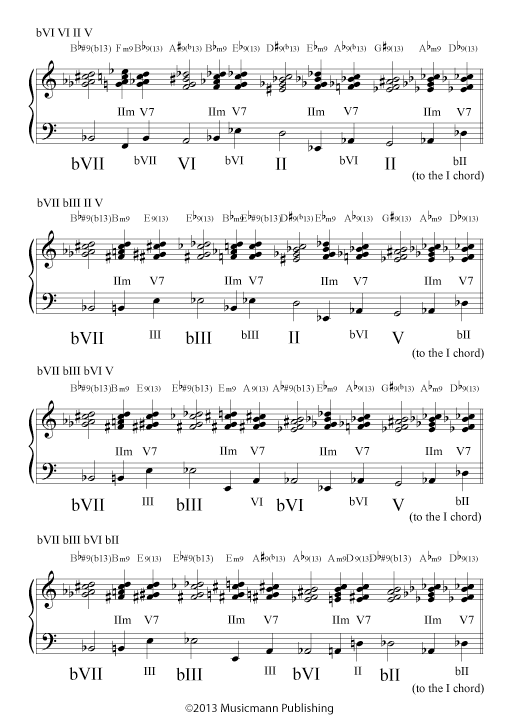
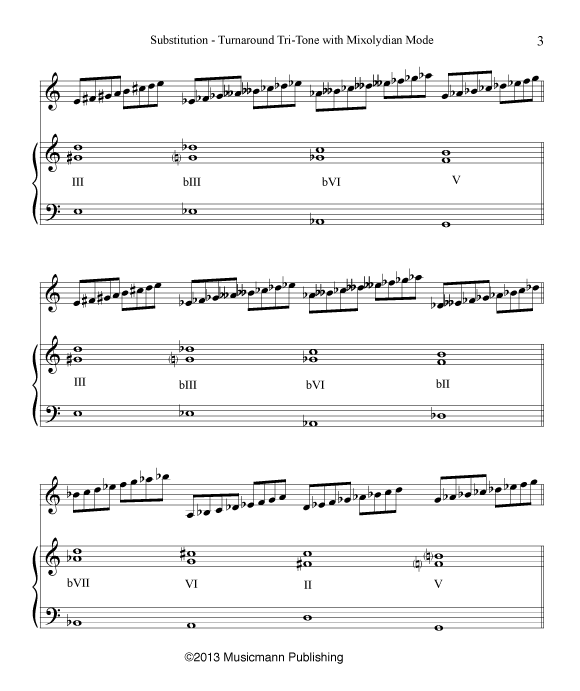
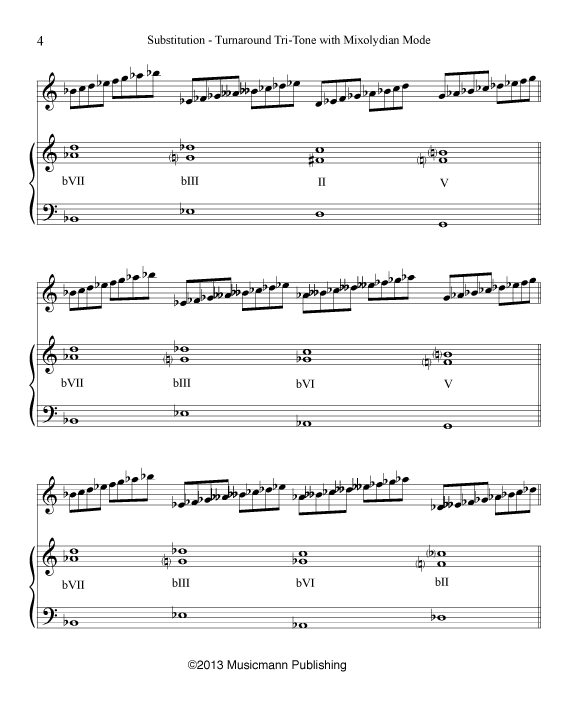
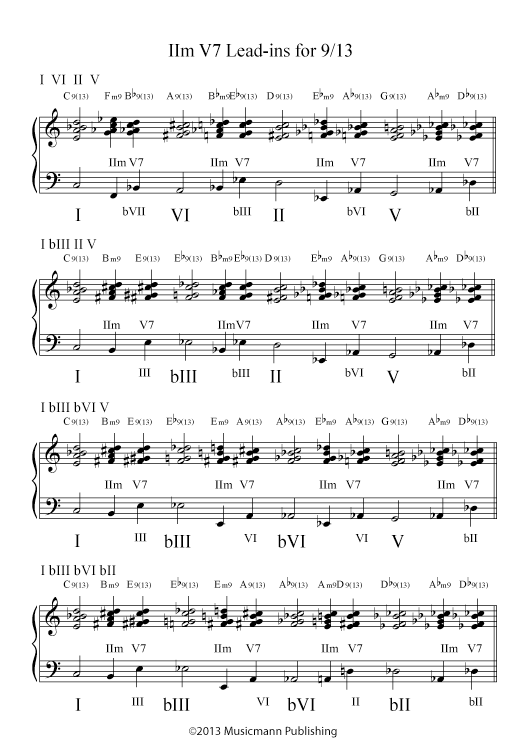
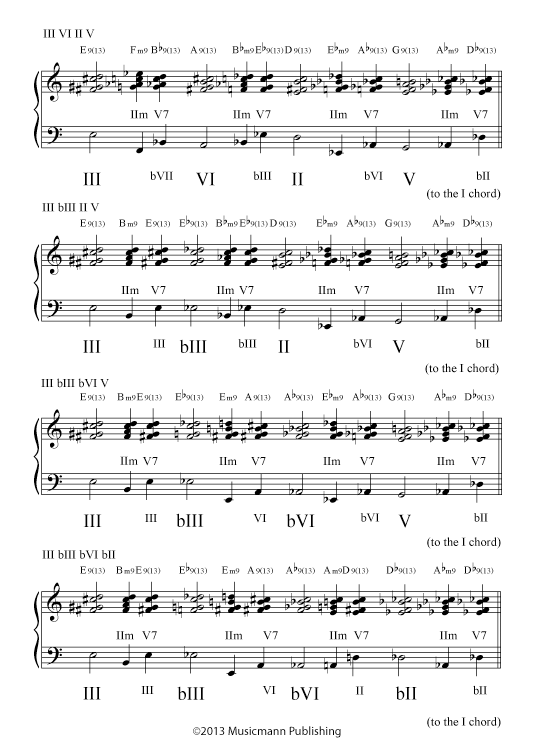
Turnaround Alterations 11-4
[features_box_yellow width=”75%” + border=”2px”]Level: Intermediate/Advanced
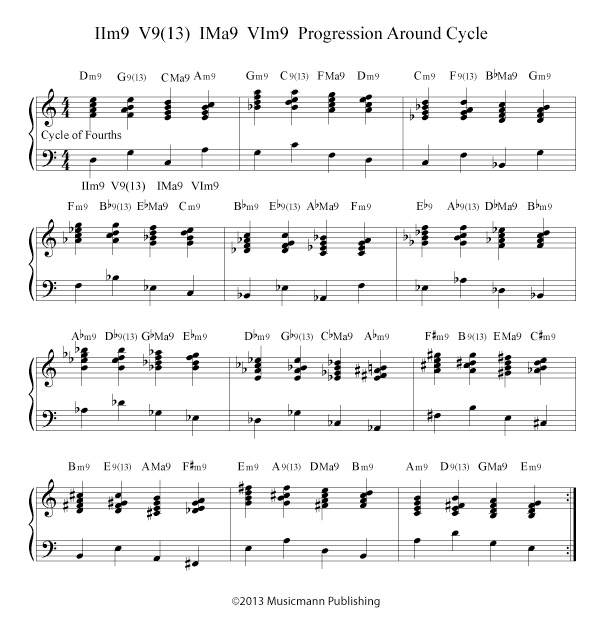
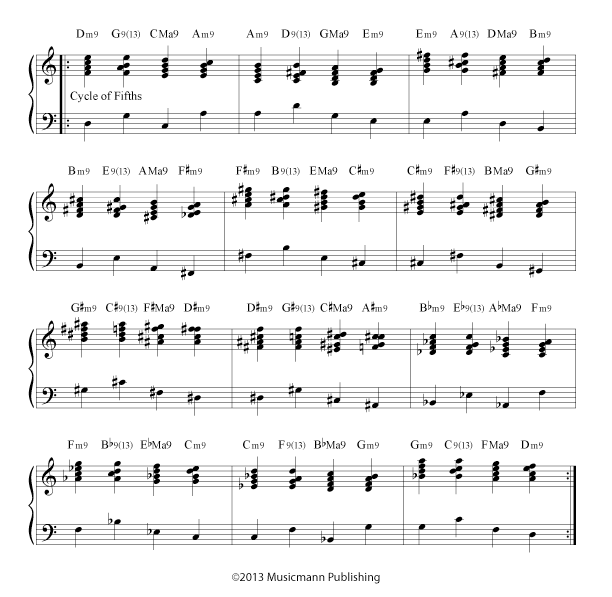
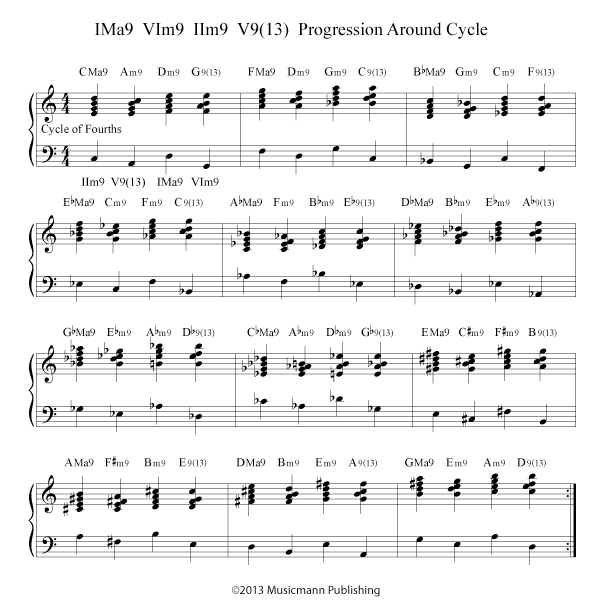
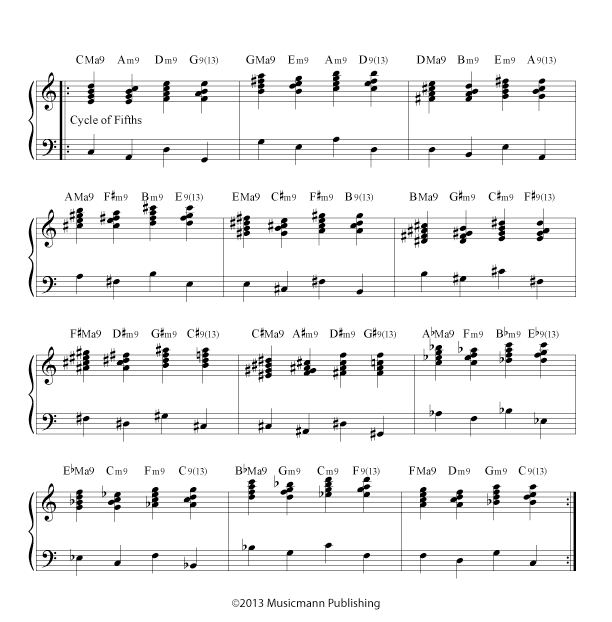
After you have studied the Major and Minor Turnarounds, begin practicing all of the alterations. Take each alteration separately, using it with the Turnarounds, in all inversions around the Cycle of Fourths and Fifths and up and down chromatically. As said before, this is a long-term study of great importance. Keep at it. You will definitely need learn and hear these alterations to play jazz.[/features_box_yellow]
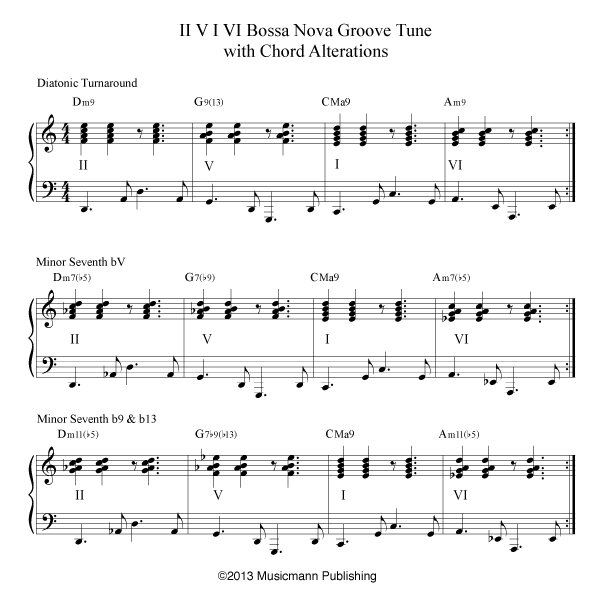
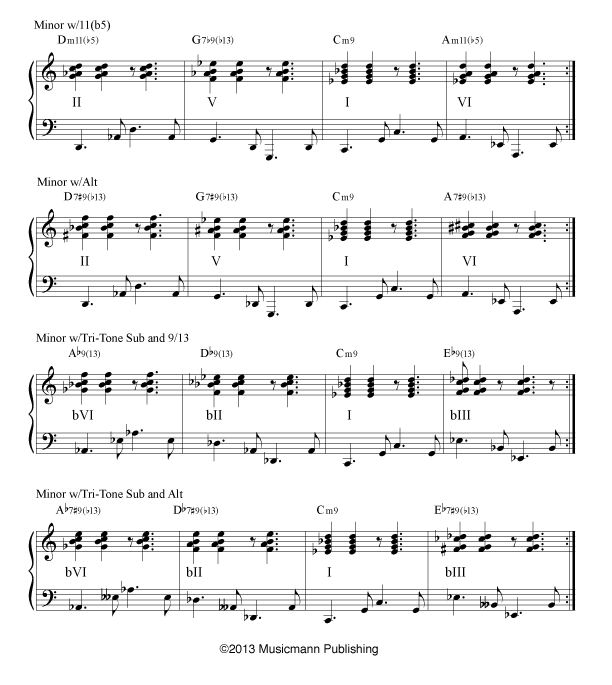
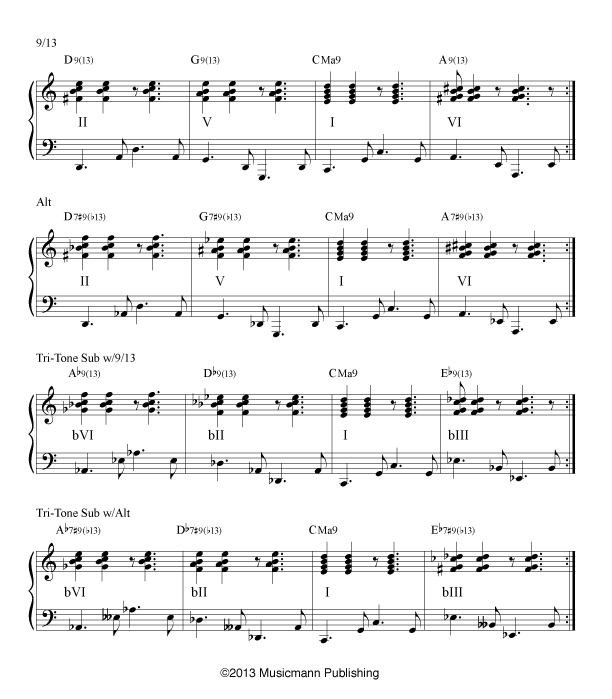
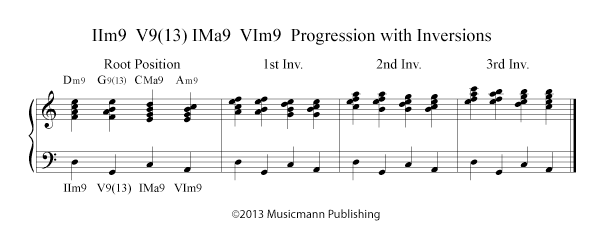
Once you have mastered the major and minor progressions, then you can start altering the 9th, 11th and 13 intervals.
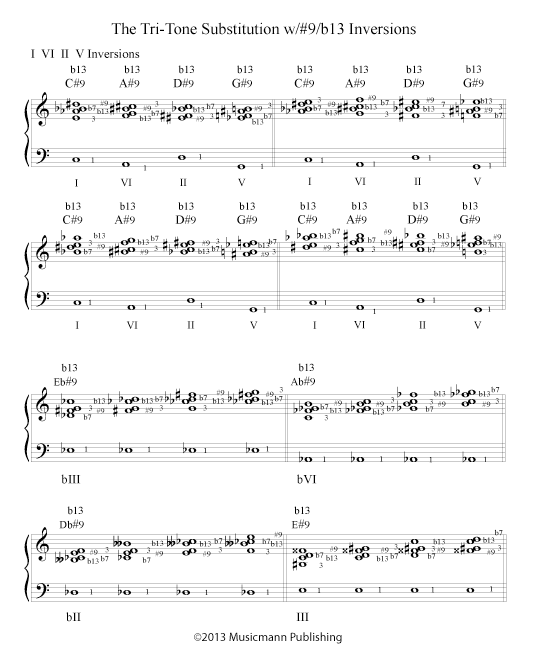
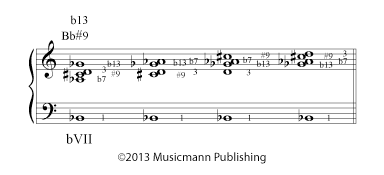
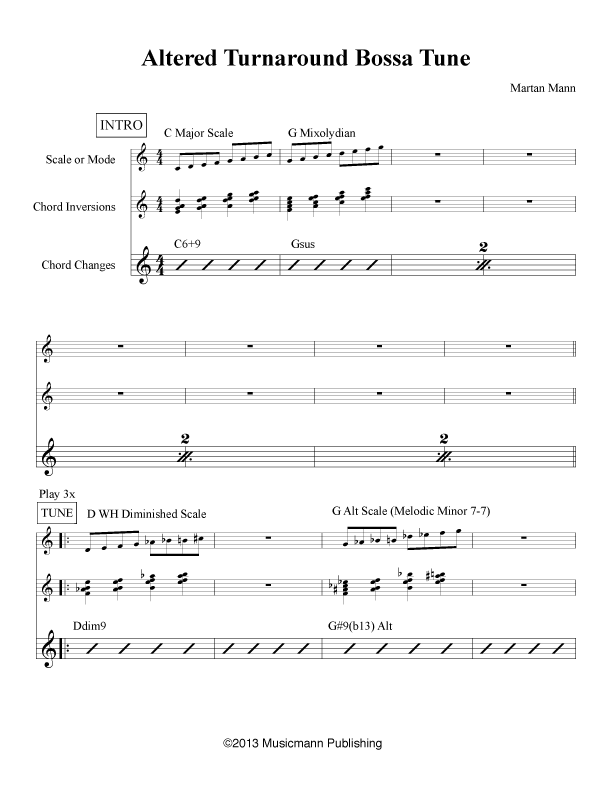
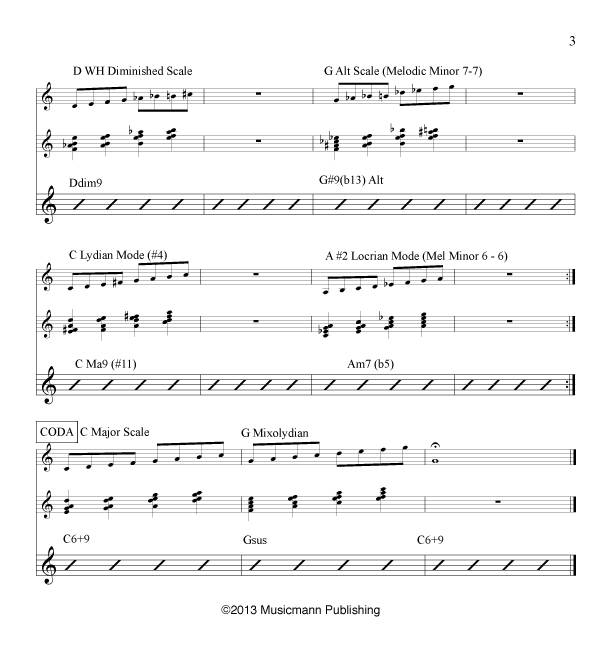
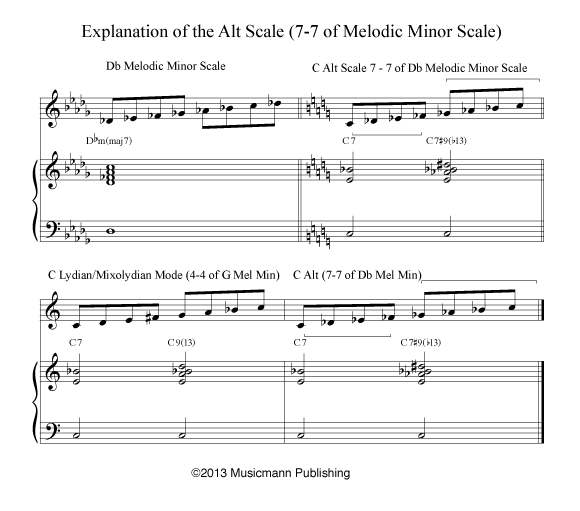
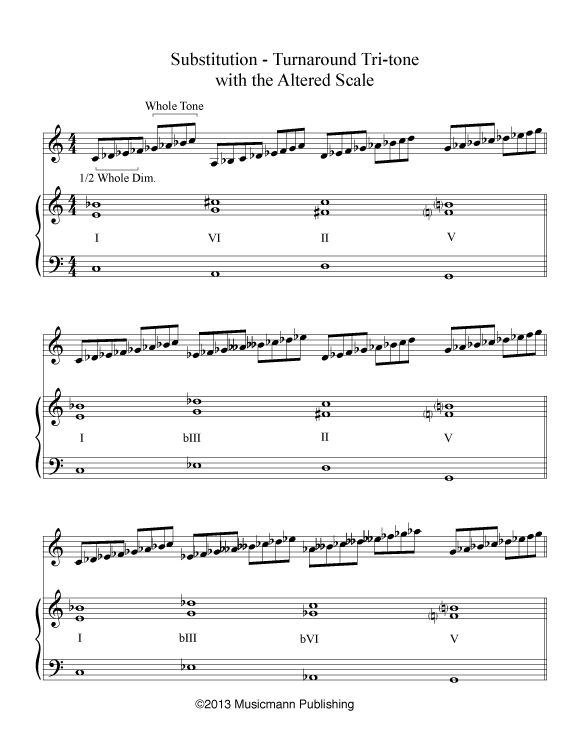
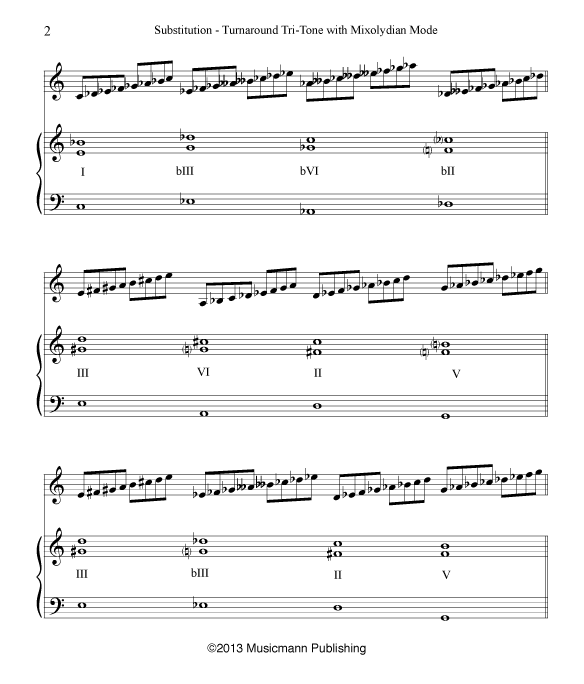
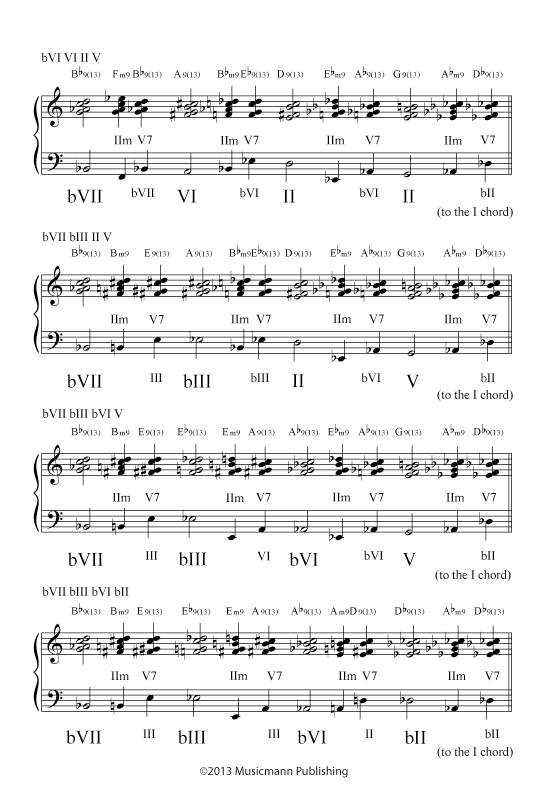
Since these are all dominant seventh chords, all the sevenths are flatted. Next, alter the 9th interval. You can play the ninth as a major 9, flatted 9th or sharped ninth. You can also alter the 13th as a major 13th or flat 13th. Finally, you can alter the 11th. The natural 11th is also know as the sus 4. The sharp 11th is also an augmented fifth.
Once you have practiced the V7 dominant chords, start experimenting with alterations of the II, VI and I chords.
Here’s a suggestion for practice. Now that you know various progressions containing the V7 chord, start playing them around the Cycle of Fourths, Fifths and up and down chromatically. Take one V7 alteration at a time. Play it in all inversions.
Then, it is recommended that you practice various alterations of the minor and major chords.
Some of these alterations will be more useful to you than others. The reason that you are practicing them is to place new sounds into your ears. I believe, that once the subconscious assimilates new harmonic vocabulary – then, your natural intelligence will start expressing these sounds in your improvisations and compositions. The most important element is to play them in all keys. Of course, you will be more drawn to certain sounds over others, however, why not play them all? Experiment!
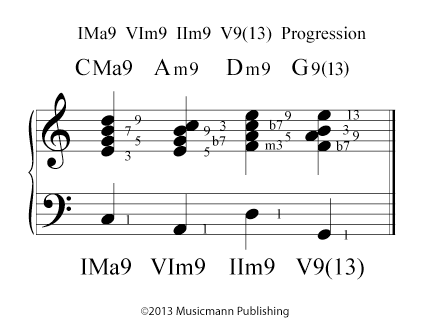
Just to mention: There are many methods of spelling chords. For consistency, I stack the thirds and then place in the accidentals. When reading #7, think “major seventh”. The dominant seventh is also referred as a major triad with a flatted seventh. Notice that the minor third, which defines a minor chord, is also used in a diminished chord.
These are just some sample chords. It’s fun to seek out other possibilities.
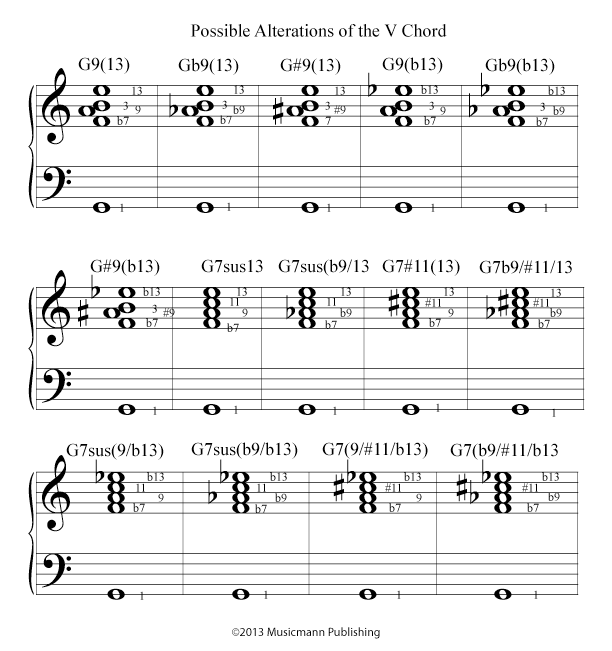
[membership_download_item_pdf link=”http://jsfp.s3.amazonaws.com/ProgAlts5a.pdf” + target=”_self”]Turnaround Progression Alterations for V Chord[/membership_download_item_pdf]
[membership_download_item_pdf link=”http://jsfp.s3.amazonaws.com/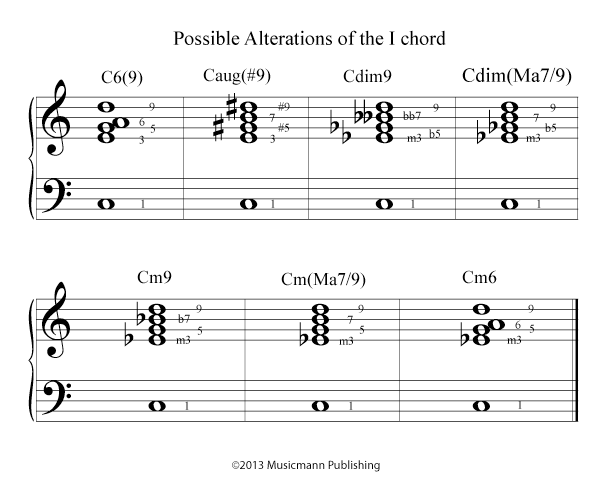 .pdf” + target=”_self”]Turnaround Progression Alterations for I Chord[/membership_download_item_pdf]
[features_box_blue width=”75%” + border=”2px”]
[green_tick_2_list width=”100%”]Personal Evaluation
- I can quickly and easily play the Turnaround Alterations Progression around the Cycle of Fourths, Cycle of Fifths and up and down chromatically in all keys.
- I can quickly and easily play the Turnaround Alterations Progression Inversions around the Cycle of Fourths, Cycle of Fifths and up and down chromatically in all keys.
- I can do the above using the left hand playing the chord and singing the root note.
[/green_tick_2_list]
[/features_box_blue]