Time is not a click.

Music is not about perfection.  It is about feeling.  Jazz, in particular is about groove.  It is groove which gives jazz it’s identity, it’s purpose, it’s joy.  You know groove when you hear it.  You know what it feels like.  The main issue is . . . how to develop a great groove in your playing?

I’m pretty sure that ALL great players practice to a metronome.  Practicing to a metronome develops an internal “click” in the player’s subconscious.  However the click is only a reference point.  If you have recorded your music, you, and all the players on the recording, have probably listened to a “click track” while recording.  All the players have the same reference point of time.

But this does not create a groove.  The groove is a point of “off-ness”.  Being “off” of the click of the metronome creates emotion.  If the player simply attempts to duplicate the metronome click, the music is “groove-less”.  It won’t swing.  It won’t have the required emotion.

I think of “time” as a pressure, not a click.  It feels like water coming out of a hose.  It is continuous.  It never “let’s up”.  Once you have identified this pressure (I often feel it in the small of my back), then identify with it.  The pressure is not dependent upon what you are playing.  It is just “there”.  It is automatic.  It is constant.

How do you develop a particular groove?  (In fact, there are many different grooves in jazz.)

  1. First, you have to specifically identify the groove you want to develop.  Is it a deep blues groove?  Or, maybe an intense “Chick Corea Groove”?  Perhaps it is a “Stan Getz Bossa Groove”?  You might be trying to duplicate an “Oscar Peterson Groove”?
  2. Second, listen to a recording which exemplifies the particular groove you are trying to develop.  This is important:  sing the groove.  To sing the groove, don’t think about the chords or melodies.  Make up a scat language which sounds like the groove.  You don’t have to sing on pitch.  Just approximate the feeling and timing of the groove.
  3. Third, you need to develop an accompaniment pattern to play with a simple chord change.  I often suggest using a diatonic turnaround, i.e.:  I, VIm, IIm, V7.  Play a looped pattern over and over as an accompaniment pattern.  For instance: you can use a simple “chunk, chunk” in the left hand, playing quarter notes.  Or, if you are more advanced, play a simple bass line.  Play this chord pattern over and over while singing the groove.  Perhaps, for example you can play a Boogie Woogie groove using a 12-bar blues.  Make sure the accompaniment pattern you choose is easy for you to play.
  4. Once this is automatic, then start singing improvised simple melodies over your accompaniment pattern.  The sung melodies do not duplicate the groove.  You have to imagine that you are a singer or instrumentalist singing off of the accompaniment pattern.
  5. Finally, apply this groove to an actual song.  Start by just learning the accompaniment and chord changes of the song.  Then, very slowly add in melody.  Adding in melody is a significant level of difficulty.  Remember not to play the melody as a groove.  The melody is separate from the groove.

Always return to the recording of the original groove that you are attempting to learn.  Keep reinforcing it in your subconscious.  Do it every day until the groove is permanently part of your subconscious language!

Tritone Substitution w/Alt Chord Lead-ins 12-11

Tritone Substitution w/Alt Chord Lead-ins 12-11

[features_box_yellow width=”75%” + border=”2px”]Level:  Advanced

After you have mastered the Tritone Substitution w/Alt Chords Inversions, begin practicing all of the Tritone Substitution w/Alt Chord Lead-ins.[/features_box_yellow]

video
play-sharp-fill

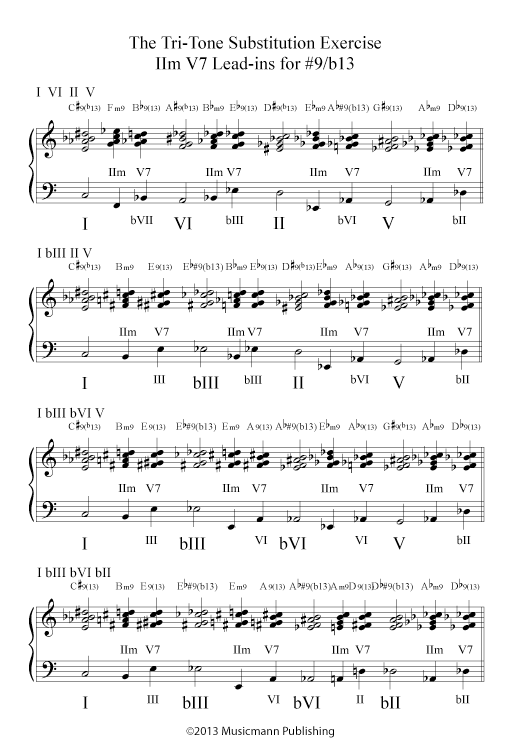
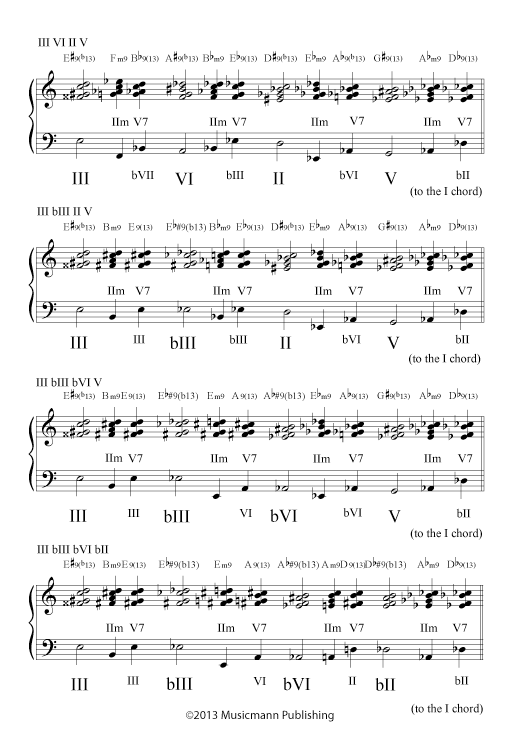
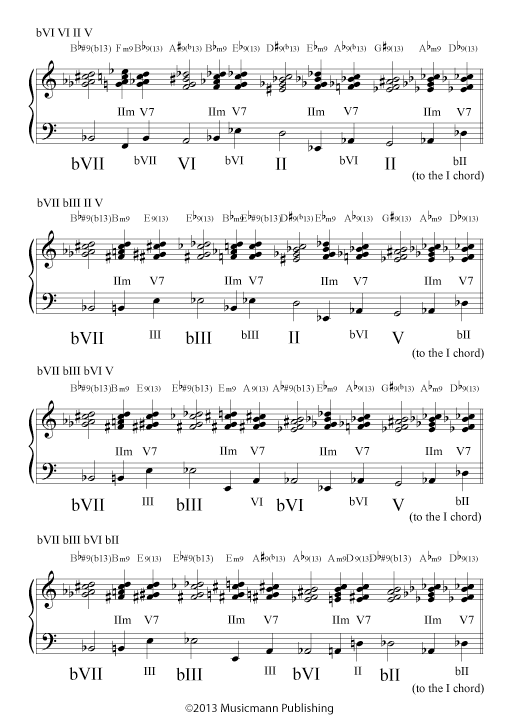
It’s time now to apply the prior study of II V Lead-in to the Alt Chord.  Very simply . . . just play a II V before any Alt Chord.

TTSubAltLIaTTSubAltLIbTTSubAltLIc

[membership_download_item_pdf link=”http://jsfp.s3.amazonaws.com/TTSubAltLIa.pdf” + target=”_self”]Tritone Substitution w/Alt Chord Lead-ins – Page 1[/membership_download_item_pdf]

[membership_download_item_pdf link=”http://jsfp.s3.amazonaws.com/TTSubAltLIb.pdf” + target=”_self”]Tritone Substitution w/Alt Chord Lead-ins – Page 2[/membership_download_item_pdf]

[membership_download_item_pdf link=”http://jsfp.s3.amazonaws.com/TTSubAltLIc.pdf” + target=”_self”]Tritone Substitution w/Alt Chord Lead-ins – Page 3[/membership_download_item_pdf]

[features_box_blue width=”75%” + border=”2px”]Personal Evaluation

[green_tick_2_list width=”100%”]

  • I have practiced all the Tritone Substitution w/Alt Chord with II V Lead-ins in all substitutions and in all keys.
[/green_tick_2_list]

[/features_box_blue]

Tritone Substitution w/Alt Chords Inversions 12-10

Tritone Substitution w/Alt Chords Inversions 12-10

[features_box_yellow width=”75%” + border=”2px”]Level:  Advanced

After you have mastered the Tritone Substitution w/Alt Chords, begin practicing all of the Tritone Substitution w/Alt Chords Inversions.[/features_box_yellow]

video
play-sharp-fill

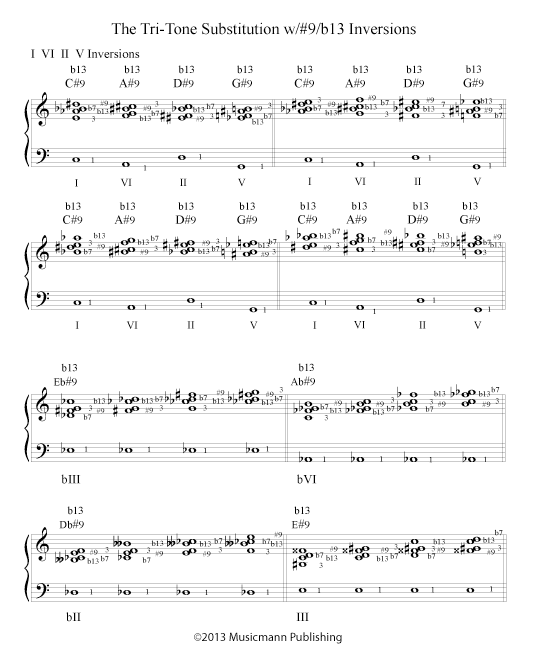
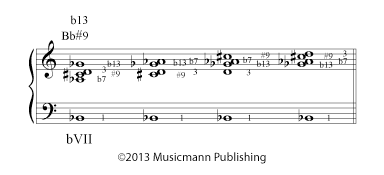
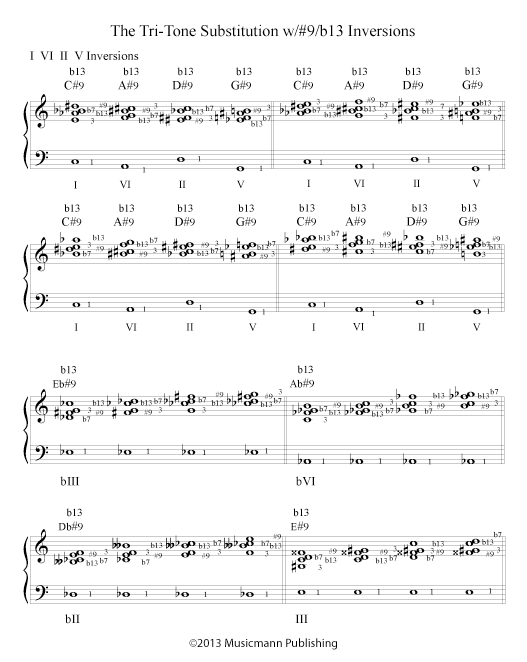
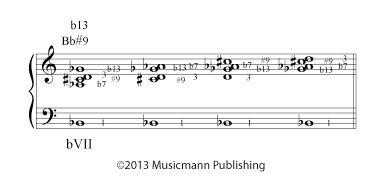
Now start learning all the Alt Chords by using the Turnaround  with Tritones in all inversions.

TTsubWaltInvATTSubWaltInvB

[membership_download_item_pdf link=”http://jsfp.s3.amazonaws.com/TTsubWaltInvA.pdf” + target=”_self”]Tritone Substitution w/Alt Chords Inversions – Page 1[/membership_download_item_pdf]

[membership_download_item_pdf link=”http://jsfp.s3.amazonaws.com/TTSubWaltInvB.pdf” + target=”_self”]Tritone Substitution w/Alt Chords Inversions – Page 2[/membership_download_item_pdf]

[features_box_blue width=”75%” + border=”2px”]Personal Evaluation

[green_tick_2_list width=”100%”]

  • I have practiced all the Tritone Substitution w/Alt Chords Inversions in all substitutions and in all keys.
[/green_tick_2_list]

[/features_box_blue]

Tritone Substitution w/Alt Chords 12-9

Tritone Substitution w/Alt Chords 12-9

[features_box_yellow width=”75%” + border=”2px”]Level:  Advanced

After you have mastered the Alt Introduction, begin practicing all of the Tritone Substitution w/Alt Chords around the Turnaround with Tritone Subs.  Carefully study the similarities and difference between the Tritone Substitution w/Alt Chords.[/features_box_yellow]

video
play-sharp-fill

Now that we understand the Alt chord . . . we can learn it by using the Turnaround played with all the Tritone Subs.  This is a long-term study.

TTSubWaltExATTSubWaltExB

[membership_download_item_pdf link=”http://jsfp.s3.amazonaws.com/TTSubWaltExA.pdf” + target=”_self”]Tritone Substitution w/Alt Chords[/membership_download_item_pdf]

[membership_download_item_pdf link=”http://jsfp.s3.amazonaws.com/TTSubWaltExB.pdf” + target=”_self”]Tritone Substitution w/Alt Chords[/membership_download_item_pdf]

[features_box_blue width=”75%” + border=”2px”]Personal Evaluation

[green_tick_2_list width=”100%”]

  • I have practiced all the Tritone Substitution w/Alt Chords in all substitutions and in all keys.
[/green_tick_2_list]

[/features_box_blue]

Swing Groove Cycle of Fourths Bass Lines 16-7-1

Swing Groove Cycle of Fourths Bass Lines 16-7-1

[features_box_yellow width=”75%” + border=”2px”]Level:  Advanced

After you have mastered the Jazz Waltz Groove w/Modal Soloing, start learning the Swing Groove Cycle of Fourths Bass Lines.[/features_box_yellow]

video
play-sharp-fill

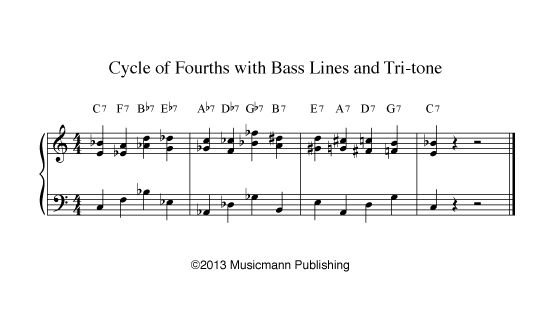
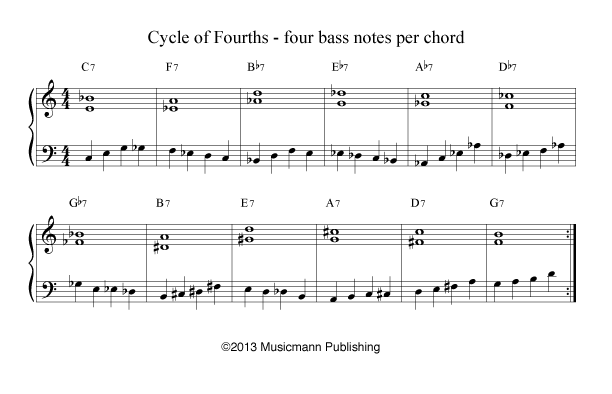
Cycle of Fourths with Bass Lines:

  1. It’s very helpful to learn how to play bass lines through tunes.  Study how a bass player thinks.
  2. Play the Cycle of Fourths with a single note in the left hand and the 3 & b7 in the right hand.  Ask yourself:  How many ways can I move from C to F?  (see example and video)
  3. Play bass lines (and comp with 3 & b7) slowly around the Cycle with metronome.  This will take awhile to master.


Cycle4thsw-7ths

Cycleof4ths4beats

[membership_download_item_pdf link=”http://jsfp.s3.amazonaws.com/Cycle4thsw-7ths.pdf” + target=”_self”]Cycle of Fourths Bass Lines Page 1[/membership_download_item_pdf]

[membership_download_item_pdf link=”http://jsfp.s3.amazonaws.com/Cycleof4ths4beats.pdf” + target=”_self”]Cycle of Fourths Bass Lines Page 2[/membership_download_item_pdf]

[features_box_blue width=”75%” + border=”2px”]Personal Evaluation

[green_tick_2_list width=”100%”]

  • I have practiced playing from chord to chord around the Cycle of Fourths with a single note in the left hand and the 3 & b7 in the right hand asking:  How many way.
  • I can play bass lines (and comp with 3 & b7) slowly around the Cycle with metronome.  This will take awhile to master.
[/green_tick_2_list]

[/features_box_blue]

Jazz Waltz Groove w/Modal Soloing 15-6-6

Jazz Waltz Groove w/Modal Soloing 15-6-6

[features_box_yellow width=”75%” + border=”2px”]Level:  Advanced

After you have mastered the Jazz Waltz Groove w/Melodic Figures, start learning the Jazz Waltz Groove w/Modal Soloing.[/features_box_yellow]

video
play-sharp-fill

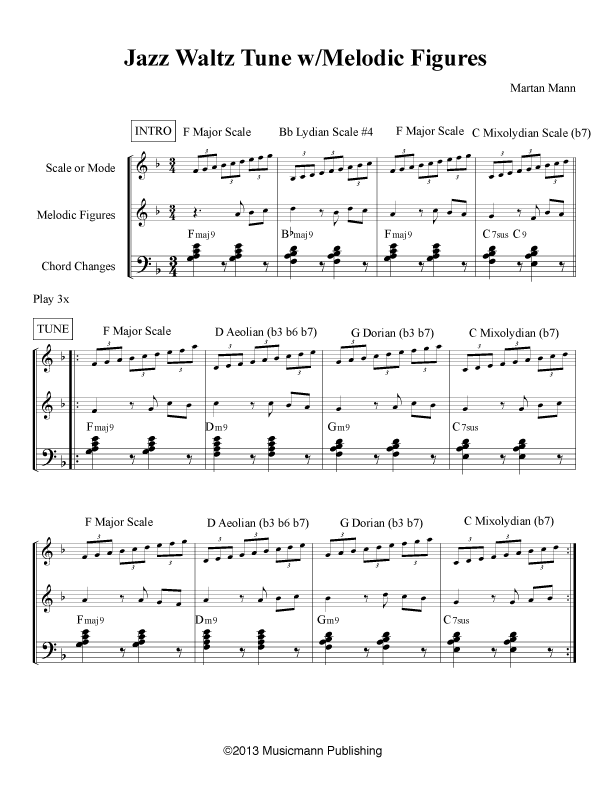
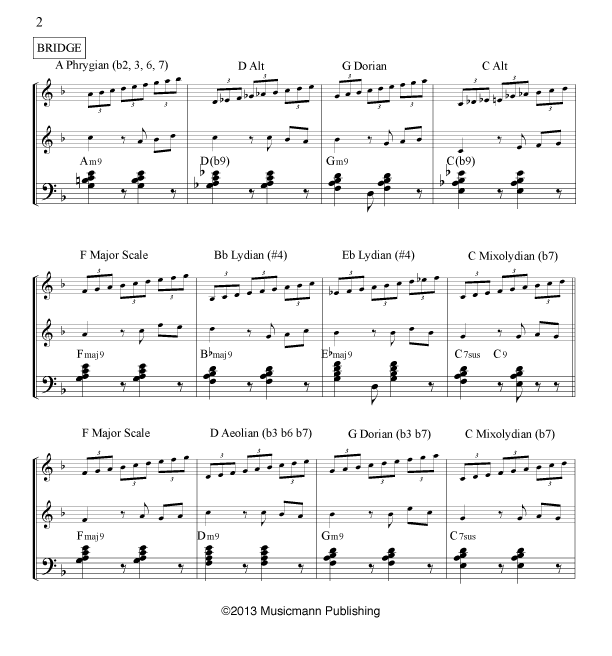
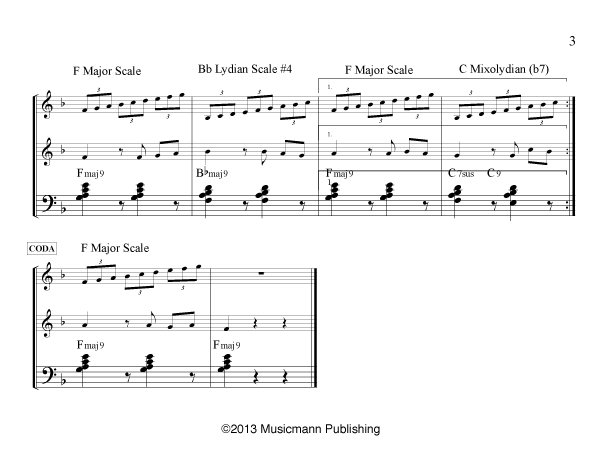
Developing the Jazz Waltz Groove with Modal Soloing:

  1. Practice “Stop on the Chord”.  Take each chord through the tune and explore it fully.   Play voicings all over the piano.
  2. When you comp . . . think of the top note of the comping chords as a melody note.
  3. Play the tune using modal playing.  Remember all licks move forward.  Play all the rhythmic values in the Continuous Melody Exercise.

JazzWaltzTuneA JazzWaltzTuneB JazzWaltzTuneC


[membership_download_item_pdf link=”http://jsfp.s3.amazonaws.com/JazzWaltzTuneA.pdf” + target=”_self”]Jazz Waltz Groove w/Melodic Figures Page 1[/membership_download_item_pdf]

[membership_download_item_pdf link=”http://jsfp.s3.amazonaws.com/JazzWaltzTuneMelB.pdf” + target=”_self”]Jazz Waltz Groove w/Melodic Figures Page 2[/membership_download_item_pdf]

[membership_download_item_pdf link=”http://jsfp.s3.amazonaws.com/JazzWaltzTuneMelC.pdf” + target=”_self”]Jazz Waltz Groove w/Melodic Figures Page 3[/membership_download_item_pdf]

[features_box_blue width=”75%” + border=”2px”]Personal Evaluation

[green_tick_2_list width=”100%”]

  • I have practiced the “Stop on the Chord” by taking each chord through the tune to explore it fully.
  • I can comp . . . thinking of the top note of the comping chords as a melody note.
  • I can play the tune using modal playing.
[/green_tick_2_list]

[/features_box_blue]


Jazz Waltz Groove w/Melodic Figures 15-6-5

Jazz Waltz Groove w/Melodic Figures 15-6-5

[features_box_yellow width=”75%” + border=”2px”]Level:  Advanced

After you have mastered the Jazz Waltz Groove w/Continuous Melody, start learning the Jazz Waltz Groove w/Melodic Figures.[/features_box_yellow]

video
play-sharp-fill

Developing Melodic Figures over the Jazz Waltz Groove:

  1. Put on the metronome and play the Jazz Waltz Groove through the tune.
  2. Play the left hand only.  You can leave out some beats.
  3. Create a specific rhythm for a melodic figure.  Use that rhythm to play melodies through the tune.  Always think forward and end on the first beat of the measure.
  4. Play through the tune and change the melodic rhythmic figures.

JazzWaltzTuneA JazzWaltzTuneB JazzWaltzTuneC


[membership_download_item_pdf link=”http://jsfp.s3.amazonaws.com/JazzWaltzTuneA.pdf” + target=”_self”]Jazz Waltz Groove w/Melodic Figures Page 1[/membership_download_item_pdf]

[membership_download_item_pdf link=”http://jsfp.s3.amazonaws.com/JazzWaltzTuneMelB.pdf” + target=”_self”]Jazz Waltz Groove w/Melodic Figures Page 2[/membership_download_item_pdf]

[membership_download_item_pdf link=”http://jsfp.s3.amazonaws.com/JazzWaltzTuneMelC.pdf” + target=”_self”]Jazz Waltz Groove w/Melodic Figures Page 3[/membership_download_item_pdf]

[features_box_blue width=”75%” + border=”2px”]

[green_tick_2_list width=”100%”]

  • I have put on the metronome and played the Jazz Waltz Groove through the tune.
  • I can play through the tune with the left hand only.
  • I can create a specific rhythm for a melodic figure and use that rhythm to play melodies through the tune.
  • I can play through the tune and change the melodic rhythmic figures.
[/green_tick_2_list]

[/features_box_blue]

Bossa Nova Turnarounds Introduction 14-2

Bossa Nova Turnarounds Introduction 14-2

[features_box_yellow width=”75%” + border=”2px”]Level:  Advanced

After you have studied the lessons in Bossa Nova Groove Introduction, start studying the lessons in Bossa Nova Turnarounds Introduction. [/features_box_yellow]

video
play-sharp-fill

Turnaround Introduction:

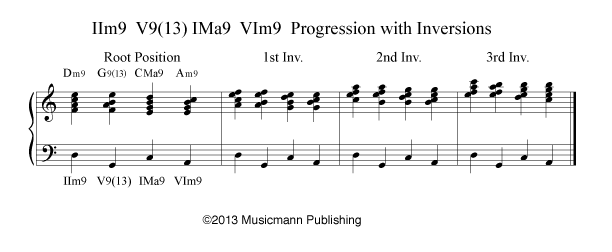
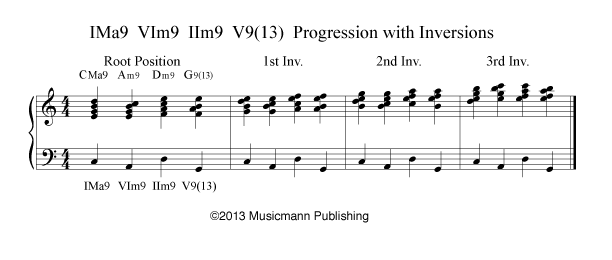
  1. There are two Turnarounds:  IIm9, V9(13), IMa9, VIm9 and the IMa9, VIm9, IIm9, V9(13).
  2. Play these Turnarounds using the BN Groove.

Prog2516Inv

Prog1625Inv

[membership_download_item_pdf link=”http://jsfp.s3.amazonaws.com/Prog2516Inv.pdf” + target=”_self”]II V I VI Turnaround[/membership_download_item_pdf]

[membership_download_item_pdf link=”http://jsfp.s3.amazonaws.com/Prog1625Inv.pdf” + target=”_self”]I VI II V Turnaround[/membership_download_item_pdf]

[features_box_blue width=”75%” + border=”2px”]Personal Evaluation

[green_tick_2_list width=”100%”]

  • I understand the two Turnarounds.
  • I can easily and comfortably play the two Turnarounds while using the BN Groove.
[/green_tick_2_list]

[/features_box_blue]

Bossa Nova Tritone Turnaround Chart 14-5-8

Bossa Nova Tritone Turnaround Chart 14-5-8

[features_box_yellow width=”75%” + border=”2px”]Level:  Advanced

After you have mastered Bossa Nova Turnaround Chart, start studying Bossa Nova Tritone Turnaround Chart.[/features_box_yellow]

video
play-sharp-fill

Practicing the Tritone Subs:

  1. Use either the II V I VI or I VI II V charts with the Tritone Subs.
  2. Choose chords and modes for the II V I VI or the Tritone Subs:  bVI bIII Im and bII.
  3. Bounce around with the chosen chord playing the Bossa Groove with both hands and also with the chords in the left hand.
  4. Play the modes in Seventh Chords  up and down.
  5. Play your chosen chords modally with a metronome.
  6. Play the modes in Seventh Chords up and down the scale (mode).

ProgLearnTurnHarMelTT1625 ProgLearnTurnHarMelTT2516ProgLearning4chEx


[membership_download_item_pdf link=”http://jsfp.s3.amazonaws.com/ProgLearnTurnHarMelTT1625.pdf” + target=”_self”]Tritone Turnaround Chart I IV II V[/membership_download_item_pdf]

[membership_download_item_pdf link=”http://jsfp.s3.amazonaws.com/ProgLearnTurnHarMelTT2516.pdf” + target=”_self”]Tritone Turnaround Chart II V I VI[/membership_download_item_pdf]

[membership_download_item_pdf link=”http://jsfp.s3.amazonaws.com/ProgLearning4chEx.pdf” + target=”_self”]Practice learning the Modes for your chosen chords and modes.[/membership_download_item_pdf]

[features_box_blue width=”75%” + border=”2px”]Personal Evaluation

[green_tick_2_list width=”100%”]

  • I have chosen chords and modes for the II V I VI or the Tritone Subs:  bVI bIII Im and bII.
  • I can bounce around with the chosen chord playing the Bossa Groove with both hands and also with the chords in the left hand.
  • I can play the modes in Seventh Chords  up and down.
  • I can play my chosen chords modally with a metronome.
[/green_tick_2_list]

[/features_box_blue]